Showing posts with label self-publishing. Show all posts

Monday, March 21, 2011

Ebooks and Self-Publishing - A Dialog Between Authors Barry Eisler and Joe Konrath


Editor's Note: Would you turn down $500K and a two-book deal with a major publisher and self-publish these books yourself? Well, one NYT bestselling author made such a choice. In an unusual move, I have linked today's post to an article that appeared on A NEWBIE'S GUIDE TO PUBLISHING last Saturday as NYT bestselling author Barry Eisler and self-publishing advocate Joe Konrath  discuss this decision and the reasons behind it. Part of the interview appears here, with a link back to the rest of the article. This article helps authors and readers learn about what is happening in the publishing industry today. (Warning: A little profanity slips through in their excitement).

Excerpt from A NEWBIE's GUIDE TO PUBLISHING
This is a live Google docs discussion. It examines the history and mechanics of the publishing industry as it exists today, analyzes the way the digital revolution reflects recent events in Egypt and the Maghreb, and considers a completely inappropriate YouTube video featuring a randy monkey and an unlucky frog. It clocks in at 13,000 words, and reveals some pretty startling things.
We encourage everyone reading the conversation to comment, and to tweet and otherwise link to it. You also have our permission to copy all or any part of it, provided you link back.
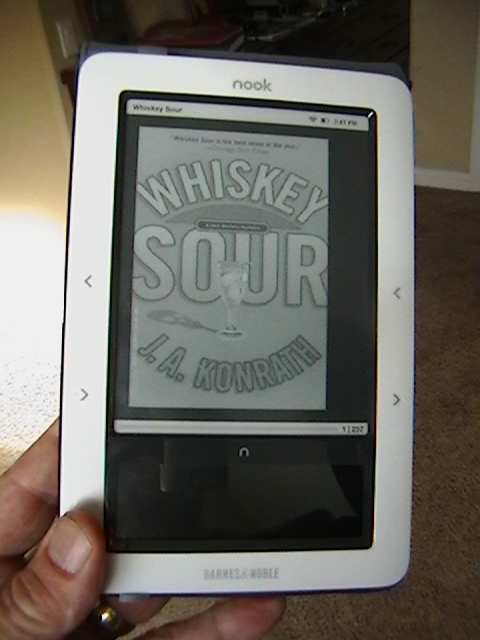
If you'd prefer to read this on your ereader, you can download various versions for free here. This zip file (you need WinZip to open it; a free trial is here) contains doc, pdf, epub, and mobi formats, so it can be uploaded to Kindles, Nooks, Sony Readers, Kobos, and pretty much any other device.
You can also go to Smashwords and get various formats for free, or to Amazon or B&N to get those formats for 99 cents (they wouldn't allow us to post for free.) It's also posted in full on Barry's blog.
Our goal is to get this information out there, because it benefits authors and could theoretically make legacy publishers smarter. Please help us spread the word. Thanks.

And I almost forgot. This recent blog post of mine where I mentioned my anonymous friend? It was Barry.

Joe: To the casual observer, you appear to be heavily invested in the legacy publishing system. They’ve been good to you, they helped you get onto the NYT bestseller list, made you wealthy with several large deals, and seem to have treated you fairly.
Barry: Well, I don’t know about wealthy, but I’ve been making a living writing novels for almost a decade now, which is a pretty great way to live.
Joe: You had six-figure and seven-figure deals. Logic dictates anyone offered a deal like that should leap at it.
Barry: You wouldn’t.
Joe: But I never had the treatment you had from legacy publishers. I would walk away from a big deal now, most certainly, because I have two years of data proving I can do better on my own.
However, what if a NYT bestseller were offered, say, half a million dollars for two books?
Or, more specifically, let's say you were offered that.
You'd take it. Right?
Barry: Well, I guess not... ;)
Joe: So... no BS... you were just offered half a mil, and you turned it down?
Barry: Yes.
Joe: Holy shit!
Barry: I know it’ll seem crazy to a lot of people, but based on what’s happening in the industry, and based on the kind of experience writers like you are having in self-publishing, I think I can do better in the long term on my own.
Joe: Holy shit!
Sorry. That needed to be said twice.
Barry: It’s okay, I like when you talk dirty.
We are living in remarkable times, aren’t we?
Joe: Indeed. "Barry Eisler Walks Away From $500,000 Deal to Self-Pub" is going to be one for the Twitter Hall of Fame.
Barry: Here’s something that happened about a year ago. Anecdotal, but still telling, I think. My wife and daughter and I were sitting around the dinner table, talking about what kind of contract I would do next, and with what publisher. And my then eleven-year-old daughter said, “Daddy, why don’t you just self-publish?”
And I thought, wow, no one would have said something like that even a year ago. I mean, it used to be that self-publishing was what you did if you couldn’t get a traditional deal. And if you were really, really lucky, maybe the self-published route would lead to a real contract with a real publisher.
But I realized from that one innocent comment from my daughter that the new generation was looking at self-publishing differently. And that the question--“Should I self-publish?”--was going to be asked by more and more authors going forward. And that, over time, more and more of them were going to be answering the question, “Yes.”

This is exactly what’s happening now. I’m not the first example, though I might be a noteworthy one because of the numbers I’m walking away from. But there will be others, more and more of them.

Joe: Over a year ago, you wrote a Huffington Post blog called Paper Earthworks, Digital Tides. You basically predicted that digital would become the preferred reading format...
Barry: You’re being kind to me--you predicted that switch way before I caught on to it. In that blog post, I was more building on what I’ve learned from you. But my general point was that digital was going to become more and more attractive relative to paper. First, because the price of digital readers would continue to drop while the functionality would continue to increase; second, because more and more titles would become available for digital download at the same time more brick and mortar stores were closing. In other words, everything about paper represented a static defense, while everything about digital represented a dynamic offense. Not hard to predict how a battle like that is going to end.
Apple sold 15 million iPads in 2010, and the iPad2 just went on sale. And Amazon sold eight million Kindle books in 2010--more digital books, in fact, than paperbacks. Meanwhile, Borders is shuttering 224 stores. So I think it’s safe to say the trends I just mentioned are continuing. And the trends reinforce each other: the Borders in your neighborhood closes, so you try a low-priced digital reader, and you love the lower cost of digital books, the immediate delivery, the adjustable font, etc... and you never go back to paper. The reverse isn’t happening: people aren’t leaving digital for paper. There’s a ratchet effect in favor of digital.
Joe: In the history of technology, when people begin to embrace the new media tech, it winds up dominating the marketplace. CDs over vinyl and tapes, DVD over VHS. The Internet over newspapers. Even Priceline over travel agents--
Barry: Yes! Sorry to interrupt, but this is something that interests me so much. I can’t tell you how many people I’ve heard saying, “But paper isn’t going to disappear.” That isn’t the point! If you ask the wrong question, the right answer to that question isn’t going to help you. So the question isn’t, “Will paper disappear?” Of course it won’t, but that’s not what matters. What matters is that paper is being marginalized. Did firearms eliminate the bow and arrow? No--some enthusiasts still hunt with a bow. Did the automobile eliminate the horse and buggy? No--I can still get a buggy ride around Central Park if I want.
Now, some new technologies really have completely displaced their forebears. For example, there’s no such thing as eight-track tape anymore. And yet some people still do listen to their music on vinyl, despite the advent of mp3 technology. The question, then, is what advantages does the previous technology retain over the new technology? If the answer is “none,” then the previous technology will become extinct, like eight-track. If the answer is “some,” then the question is, how big a market will the old technology continue to command based on those advantages?
Joe: You’re talking about niche markets.
Barry: Exactly.
Joe: We’ve discussed this before. Paper won’t disappear, but that’s not the point. The point is, paper will become a niche while digital will become the norm.
Barry: Agreed. Lots of people, and I’m one of them, love the way a book feels. I used to like the way books smelled, too, before publishers started using cheap paper. And you can see books on your shelf, etc... those are real advantages, but they’re only niche advantages. Think candles vs electric lights. There are still people making a living today selling candles, and that’s because there’s nothing like candlelight--but what matters is that the advent of the electric light changed the candle business into a niche. Originally, candlemakers were in the lighting business; today, they’re in the candlelight business. The latter is tiny by comparison to the former. Similarly, today publishers are in the book business; tomorrow, they’ll be in the paper book business. The difference is the difference between a mass market and a niche.
Joe: I also love print books. I have 5000 of them. But print is just a delivery system. It gets a story from the writer to the reader. For centuries, publishers controlled this system, because they did the printing, and they were plugged into distribution. But with retailers like Amazon, B&N, and Smashwords, the story can get to the reader in a faster, cheaper way.
And publishers aren't needed.
Do you think publishers are aware of that?
Barry: I think they’re extremely aware of it, but they don’t understand what it really means.
Joe: I believe they've gotten their business model mixed-up. They should be connecting readers with the written word. Instead, they're insisting on selling paper.
Barry: Yes. There’s a saying about the railroads: they thought they were in the railroad business, when in fact they were in the transportation business. So when the interstate highway system was built and trucking became an alternative, they were hit hard.
Likewise, publishers have naturally conflated the specifics of their business model with the generalities of the industry they’re in. As you say, they’re not in the business of delivering books by paper--they’re in the business of delivering books. And if someone can do the latter faster and cheaper than they can, they’re in trouble.


For the entire article click on this link to A NEWBIE"S GUIDE TO PUBLISHING

Wednesday, March 9, 2011

Kay's Words blog interview: Mark Young


Editor’s Note: I am taking a break. My friend, Kay Marshall Strom, posted an interview today on Kay’s Words about … me and Revenge: A Travis Mays Novel. You got it, a little promo. I promise we’ll get back to mystery crime writing, publishing, and law enforcement in the very near future. Click on the link at the end of this post if you’d like to read the interview in its entirety. Otherwise … go ahead and take a break. You deserve it.
Glowing Author: Mark Young

Glowing Author #29

Looking for an entertaining mystery, dripping with suspense and spiced with a dash of romance?  I thought you might be. Which is why I’m glad Mark Young stopped by to tell us about his debut novel.  So, without further delay…
Heeeeeere’s Mark!
Congratulations, Mark! 
Thank you.  And thank you, Kay, for the opportunity to tell others aboutRevenge: A Travis Mays Novel.
So, tell us a bit about your new book. 
Here’s what the backcover says: When a trained killer threatens ex-cop Travis Mays—and those Travis loves—he finds a skilled adversary and an unexpected fight. 
Haunted by his past, Travis begins a new life and a new career, teaching criminology at a  university and building a cabin in the Idaho Mountains. He hires a beautiful river guide, Jessie White Eagle from the Nez Perce tribe, to steer him safely through raging whitewater, only to find that this trip changes everything—for Travis, for Jessie, and for those they hold dear. In the shadows lurks a man—calling himself Creasy—determined to make sure Travis pays for past sins.
It’s a fast-paced thriller that takes readers on a wild ride down Idaho’s whitewater rivers, along the historic Lolo Trail once tread by the Nez Perce nation, and onto the city streets of California. Tighten your helmet. This ride never stops until the last shot is fired and the final body falls. 
Wow!  Not the kind of plot line just anyone could pull off!  Could this be influenced by your “day job”?
Six years ago, I ended a twenty-six year career in law enforcement. It was a challenging and fulfilling mission, but my body finally told me it was time to change direction.
During those years in law enforcement, I was afforded many opportunities as a detective and sergeant not normally available to cops in mid-sized agencies like my own— the Santa Rosa Police Department (SRPD) in California. I worked on several law enforcement task force operations, including the presidential Organized Crime and Drug Enforcement Task Force targeting major drug traffickers, and the federal Organized Crime Task Force charged with identifying and prosecuting prison gang leaders.
So when I sat down to write my first crime mystery novel, I was able to draw upon years of experience—people from all walks of life, crime cases, personal impressions, and a little police humor gathered from real characters.
How did you come up with this specific plot line?
Actually, my attempt to learn to fly fish led to it. After leaving law enforcement, I needed to move my family from California to a more rural setting. So we packed up and moved to a small town in eastern Washington, a few miles from the Idaho border.
One of the things I promised myself was that I’d learn to fly fish. One of the fishing areas lay in central Idaho, along the beautiful Clearwater, Selway, and Lochsa rivers. Truly God’s country. The Nez Perce (NP) Indian reservation straddles a good chunk of these mountains, and I developed an interest in their culture and history. I began to envision a story where a character from my law enforcement world connects with a character from the NP law enforcement world, and they work together to solve a crime while learning about each other’s way of life.
I began to research the cultural, historical and present-day challenges of the NP. I interviewed the chief of the NP Tribal Police, members of the NP tribe, spiritual leaders in the community, and one individual who headed up archeology projects of this Indian culture for more than thirty years. Unfortunately, I could not use most of what I learned for this novel. I hope to dish out additional morsels of information in upcoming sequels to Revenge.
My interest in cultural history arises from my own personal history and experiences. I can trace my heritage, through my mother’s side, back to the Cherokee nation, with roots in Oklahoma. And, in 1973, I had an opportunity as a reporter to travel to South Dakota where I interviewed American Indian Movement (AIM) leaders Dennis Banks and Russell Means during the takeover of Wounded Knee on the Pine Ridge Indian Reservation. During the standoff between AIM members and federal authorities, I was able to move into the town during the siege and interview members of the Oglala Sioux Nation about conditions they faced on the reservation.
The plot for Revenge was spawned from this background.

Tuesday, February 22, 2011

Chapter 2: One Novelist’s Journey to Self-Publication


Publishing In A Changing World
By Mark Young
Editor’s Note: This week marks a major turning point in my writing career. My debut novel, REVENGE: A Travis Mays Novel, came out as an eBook ten days ago. Yes … I crossed that point of no return. Here are the four Ws— who, what, where and when—that led me to self-publish. I hope these articles encourage other writers who find themselves writing in this changing world of publishing. Writers and readers have every reason to be hopeful. Here are my reasons:

I knew my writing career veered down an uncharted highway the moment I pressed that button one week ago. While uploading Revenge: A Travis Mays Novel onto Kindle’s Direct Publishing platform, I gulped and thought, Where is that delete key? Maybe I should think about this for a moment.  Too late. It was gone. Vanished into that digital world where words become computer code. I knew a way to stop this process, but after a moment of reflection I continued to charge ahead, knowing this was the right thing to do. At least for me.

And then I felt a rush of excitement. Okay, let’s just see where this will go. It felt good. I knew I’d finally reached a point where I could take matters into my own hands. I paused just a moment before pushing onward, finally pressing a couple more buttons to send my baby coursing through Barnes & Noble’s PubIt for the Nook and Smashwords for everything else—Sony, Kobo, iBookstore and a bunch of other eReaders.

So, I am out there after more than five years of trying find my way in the traditional publishing world.  Now, I can go online to Amazon, Barnes and Noble or Smashwords web sites and see my book resting on their digital shelf. It is a good feeling.

My decision to self-publish came about three months ago as I re-evaluated my writing career. Maybe it had been festering in my subconscious for a while, waiting for just the right moment to coerce my hand. Certain events seemed to force it to the surface, demanding that I make a choice. Here are the reasons I shifted direction:

First, my last round of rejections compelled me to painfully examine what I was trying to accomplish as an author. As part of this uncomfortable reflection, I began to scrutinize everything that seemed to be occurring in the publishing worlda recession, layoffs, bankruptcies, and re-structure of companies back to their bare bones.  Couple this with the looming fact that I was facing the final months of my self-imposed five-year goal to be published—something had to give. My publishing career was going nowhere … fast.

There had been moments of hope. Several editors expressed a genuine interest and excitement (okay, maybe I mistook their excitement for stomach pains) when they read a couple chapters and looked over the book proposals without dropping them in the circular file. They were not those gatekeepers that tell you “send it to me and I’ll get back to you,” and are never heard from again until the next writing conference. These acquisition editors seemed to be expressing honest-to-goodness interest in my writing. They actually tucked my novels under their arms and carried them into the inner sanctum of their respective publishing houses. My manuscripts cleared the gatekeepers. I’d wait weeks and months, hoping to get that final word of approval. Then it would come. By letter or by email, I’d learned my novel died a painful death when some unidentified committee members gave it thumbs down, reminiscent of brutal Roman times. Reluctantly, I’d store those novels away on the shelf and start on the next.

The second reason I shifted direction away from the traditional approach was that major changes seemed to be occurring in the publishing world. These changes began to alter my perception of my writing world. I slowly changed my attitude toward self-publishing as I began to connect with a group of writers who had modified their own perceptions over time. They persuasively championed the idea that authors who self-publish need not be ashamed. That to self-publish did not mean you were a failure as a writer. They argued that those who switched now just might be ahead of the publishing curve.

To further reinforce this concept, I watched in amazement as the eBook revolution exploded over the last year while publishing giants and Amazon vied for price control over these digital marvels. We all watched as eReader sales drastically climbed to new heights, while eBook sales soared into the double-digit percentile of all books sold. Barnes and Noble, Amazon, and other eReader distributors struggled to meet consumer's voracious appetites for thise digital readers as Christmas loomed nearer. I believe both companies had to cut off sales, particularly in Europe and elsewhere, to meet buyer demands in the U.S., Canada and the U.K during this pre-Christmas rush.

Rumors began circulating when Amazon announced that their eBooks were significantly outselling their  hardcover prints. A few months later, Amazon announced that eBooks were outselling their paperbacks. Everything seemed to be shifting while hard economic times continued to attack. I could almost smell fear emanating from tradition publishers and literary agents, each eyeing a volatile market that seemed on the verge of collapsing at times.

Rumblings I picked up online and at writers conferences about the impact of Kindles, Nooks, and iPads continued to gain momentum as the digital revolution rolled on. I began to understand market potential for authors in this digital age, particularly for new writers trying to develop and expand a readership. I began reading Joe Konrath’s great blog A Newbie’s Guide To Publishing, as he continually compared the two opposing markets—tradition versus self-published—while hammering away at long-held perceptions about publishing, age-old ideas that may not longer be valid in the current market. I came across Aaron Patterson’s The Worst Book Ever blog, where this young man—emerging from the construction trade to create his own writing career and publishing company for authors—joined Konrath and other writers, urging authors to step out and take a chance in this self-publishing tidal wave. I saw several unknown author’s eBook sales reach a level that would make NYT bestselling authors jealous.

I watched hand-to-hand combat between Amazon and Macmillan over what they termed the Agency Model, a concept pushed by traditional publishers where they—not the authors or Amazon—set the price for books. Macmillan won the first battle in that war, but I feel many more battles will be forthcoming and traditional publisher may lose that war unless they pay attention to the desires of their readers. Even before the ink dried on that first skirmishing agreement, Amazon began courting authors with tempting royalty offers—up to 70 percent if self-publishers kept their eBooks priced between $2.99 and $9.99. Match that offer with traditional publishing royalties in which most authors make only a fraction of their book sales. Or that authors can roll out their novels onto this growing market within 48 hours compared to eighteen months or longer. Where self-published prices, digital distribution and POD printing options actually match readers’ and authors’ pocketbook.

I saw the rise in eReader purchases, and the gradual climb of eBook sales from low single-digit percentages to escalating double-digits. Amazon spokesperson Russ Grandinetti, vice-president for Kindle, told a Digital Book World panel several weeks ago: “However fast you think this change is happening, it’s probably happening faster than you think.” Kindle’s Nation writes, “Publishers continue to set new release prices reflexively in the $12-$15 range, but only two of the top twenty bestselling eBooks in the Kindle Store are priced above $9.99.” Others—like self-publishing guru Joe Konrath—believe that the “sweet price” for eBooks might be around $2.99. Authors opting into the traditional publishing Agency Model have no control over these price points, while traditional publishers continue to offer their eBooks equal to or slightly below their print book prices. Publishers continue to assume readers will continue to pay higher eBook prices for NYT bestselling authors.

I believe they are wrong.

Fissures are emerging in the old castle walls of publishing. The old paradigm—query, submission, agent, publisher, contract—has begun to shift as writers begin to take more control over all aspects of their writing—editorial, production, price point settings, advertising, distribution, and marketing. Maybe this is in response to a growing trend over the last ten years where many traditionally-published authors were forced to take on a large portion of  the responsibility for marketing and promotion, paying for self-promotion to boost their sales out of their own pockets while struggling to find time to write.

Pushing this even further, a growing number of traditionally-published novelists and unpublished authors began paying for freelance editing out of their own pockets in order to be competitive, even before publishers got their hands on the manuscript. I began to  wondered if acquisition editors even know whether that newbie writer's manuscript—after being processed through so many freelance editors' handstruly represented that new writer's voice, that new writer's actually level of writing skill. After watching writers pay for editing, marketing, publicity, I began to question whether the traditional route made sense. 


I even began to buy into this trend, paying for limited editing services on novels that eventually landed on the dusty shelf while I continued to struggle to find traction somewhere among publishers. In this process, I began to learn how to improve my craft as editors and other writers provided me  guidance over time. A thought began to nag at me: Why don't I make use of these services I paid for and publish my own work. Pride and my focus on a traditional publishing path killed this thought.

It was a thought that would not go away. I watched the industry begin to shift like volcanic tremors as former editors and agents—let go by traditional publishing companies and literary agencies, or voluntarily packing their own bags—began offering freelance services at reasonable rates in growing numbers. I began to wonder—after all this paid-for editing—why authors would turn their manuscript over to traditional publishers and receive a fraction of what they might receive as self publishers, since they already paid for all this upfront. Self-published writers—diligently working alongside these seasoned free lance editors—can financially afford to make their works match the quality of those books coursing through traditional publishing rivers.

Not all self-pub writers, of course, are going to strive for quality, nor will they have the skill set for writing that would attract readership. But I believe there are a number of great independent writers/publishers out there who are willing to make the sacrifice to offer great novels equal to any in traditional publishing. Those independent authors, willing to strive for the very best quality, will rise to the top as their readership gradually grows. At least, this is what I think will happen.

Right now, I perceive this industry as helter-skeltered, much like the old Wild Wild West, where past rules and laws of publication are gradually eroding. In their place, a new era of readers will emerge as technological breakthroughs continue. The old sheriff—traditional publishers and gatekeepers—are losing control. There are new guns in town. Writers like Amanda Hocking, who sold 240,000 eBooks in one month this year; Joe Konrath and Victorine Lieke, selling over 18,000 books per month; or writer B. V. Larsen, who sold over 100,000 last years, 26,000 eBooks alone in January as those numbers continue to rise. Writers reaping seventy percent of those sales as compared to traditional royalty agreements. Stack these self-publishing sales—by basically midlist or no-list writers—against some of NYT’s bestselling authors, whose works are pushed with all the power large publishing houses can muster. At times, these new guns in town must feel like they’re waging a David and Goliath contest, but we all know how that story ended.

The future may lie somewhere between these two different worlds of publishing. Maybe we will reach a common ground of understanding, where authors, agents, and publishers work to create a new publishing paradigm, where authors begin to have more of a voice in their own futures coupled with greater profits. Unless something gives, I believe there will be a completely new world out there that the Big 6 never envisioned. And they may not be sitting at the table of power much longer.

Joe Konrath wrote a compelling article, “The End Of The Bestseller” on his blog, in which he attacks the high price point of books demanded by traditional  publishers. Joe believes the readers are fed up, and will register their anger by way of the pocket book. Here is how he sees things playing out:

Conclusions?

In the future, we will no longer have the same bestsellers we have now. People will be buying more books, but more of them will be going unread. There won't be competition, because no one goes to a buffet and gets the pizza or the lasagna--they get the pizza AND the lasagna, even if they don't eat one of them.

EBooks will continue to gobble up market share once held by print books. Chain bookstores will close. Publishers will have to downsize or go bankrupt. Big name authors will self-publish, making less money than they did before, but having more control and getting a larger percentage of royalties. The playing field will truly be even, readers will find what they want to read without having it crammed down their throats by NY, and the cream will rise to the top.

And that, my friends, is a fairy tale ending in every sense of the term.

Just this last week we learned that Borders finally succumbed to Chapter 11 and Canada’s major book distribution company went belly up. One of the finest mystery books stores in Southern California closed their doors at the end of January. These occurrences seem to be replicating themselves in the publishing world faster than the U.S. national debt.

Authors need to learn to survive in this changing evolution of publishing. And so I must change along with everyone else. I’ve thrown my hat into the ring of self-publishing with my first novel, Revenge: A Travis Mays Novel.  Two other novels are waiting in the wings, while I finish my current WIP—Off  The Grid: A Garret O’Rourke Novel. Lord willing, four novels will be published by the end of 2012. I must adapt to change within this new publishing paradigm.

I think writers and readers should be excited about these changes. Sure, we will regret when some of our well-loved bookstores close their door, or we witness the passing of time-honored book signings—where authors get face time with their readers—as these events become fewer and farther between. Maybe the future will be a blend of the new and the old, but this will depend upon whether traditional publishers, distributors, and booksellers learn to adapt to this changing world along with their writers.

In a few weeks, I will be posting Chapter 3: The Nitty-Gritty of Self-Publishing, as I share some of the details learned as I published my first novel. Continue to travel with me on this journey and let’s see what the future holds for all of us—readers, writers and publishers.

Q:  How about you? What do you make of this publishing revolution?

Tuesday, October 12, 2010

EBooks: Time for unpublished novelists to change strategies?

A Revolution Blowin’ in the Wind
By Mark Young
Every unpublished novelist shares this dream: One day a publisher reaches out and taps them on the shoulder. Someone out there read the struggling writer’s pride-and-joy, their sweat-drenched manuscript. A letter arrives. The writer tears open the envelope and reads, “We are pleased to inform you that we have decided to publish …” or something to that effect.

Most unpublished novelists, however, often share this kind of letter: “Thank you for your query submission. After careful review, we have decided (insert name of novel) is not a good fit for us at this time.” Worse yet, the aspiring novelist never receives a response.

It’s a tough business—on the publisher and the writer. Publishers cannot spend precious time on concepts or ideas that that will never get traction in the market. Time is money. Unpublished authors—like their manuscripts—may find themselves at the bottom of a slush pile, slowly drowning. No one wants to gamble on the unknown.

As novelists, they’ve tried to prepare themselves in order to survive—even excel—in a highly competitive market. Spending years learning the craft, perfecting their writing, joining critique groups, and attending writing conferences. They may have subscribed to a plethora of writing magazines, attended university creative writing courses, read piles of how-to books, and painstakingly studied the craft of published and well-respected writers. Maybe they entered writing contests for short stories, novellas, or novels while writing articles on whatever subject might sell. Anything to get their name and writing out there.

One day they pluck up enough courage to start sending out those query letters and submissions—day after day, year after year, novel after novel. Each day they trek to the post office hoping for word that someone out there finally decided to take a chance. Letters of rejection start piling up, the writer beginning to recognize these rejections by weight and feel of the envelope—without ever slicing it open. Almost fatalistically, these rejections are tossed into a growing file. These rejections will be living proof someday—when dreams comes true—that this writer paid the price to become published.

Always tenacious, the writer trudges home from a day job, tiredly flopping down at the desk to begin another page, another story. Maybe this new novel will be something publishers simply can’t turn down.

This process is not unique to aspiring novelists. Through the years, now published authors fought this same fight, shared this same dream. You are not alone. For these novelists, the dream finally came true. They broke through and made it to the other side.

At some point, writers begin to toy with the idea of self-publishing. They compare costs, look at all the options, at the same time recognizing this self-published stigma might stifle their chances of traditional publishers ever picking up their work. Reluctantly, the unpublished novelist decides to wait, to be patient, to keep putting words and stories together.

Still no word comes. The words come harder and harder to write.

Meanwhile, the publishing market begins to shift—for the worse. As recession slowly grips everyone’s pocketbook, publishers begin to draw back, selecting fewer and fewer debut authors. Even multi-published authors begin to find contracts harder to win. Understandably, publishers need to invest their limited funds in projects that are most likely going to give a return. Publishers begin to hedge their bets, going for the sure thing, less and less inclined to gamble. After all, it’s all about survival. They—like writers and agents—are in business to make money. So, unpublished writers watch the market slowly dry up as fewer and fewer opportunities emerge.

Then a shift begins in the industry’s paradigm like a refreshing breeze. Technology—specifically eBooks and everything this digitalized revolution brings to the table—begins to rumble and shake the market. Everyone in the writing industry starts eyeing changing percentages as eBooks become more viable to cash-strapped consumers and a mobile society. Writers read where Amazon.com announced in July their eBooks are outselling their hardcovers, estimating that by 2011 eBooks will be outselling their paperbacks.

Authors –like Joe Konrath— start beating a drum that a new revolution is coming our way. They tell us that writers can economically step into the role traditionally held by mainstream publishers. That writers can begin to manage their own destiny, their own dreams. They can compete—granted, much like David and Goliath—in a digital market where consumers are more directly involved. Where readers are offered a wider variety of products at a lower cost. Where authors can make choices about price, title, and marketing of their novel.

Everyone watched as big-named publishers and Amazon.com started sparring in the ring like heavyweight champions struggling for the title. Publishers landed the first punch—not yet Round 1—with what they call the “agency model.” Under this plan, publishing houses will determine the price eBooks—generated from the publisher— will be sold in Amazon’s marketplace. As if to counter this blow, Amazon comes up with services for authors willing to sell directly to that company in both eBook and print form. Other companies—like Barnes and Noble—come out with self-publishing platforms for authors, offering generous royalties far and above those given by traditional publishers.

And so the war continues.

Hope begins to emerge. Writers begin to see a possibility that their novel just might reach more than test-group Beta readers or friends and family. That their writing might emerge into the light of the open market. Their dream just might survive.

So what do they do? Keep writing and trying to get their work recognized by traditional publishers and agents? Or, do they start changing strategy, venturing into this new world offered by the eBook revolution?

This new world will still require well-written, well-edited novels. However, this new world of consumers appear eager to sample new authors at a price affordable to almost everyone. The survival of the fittest still continues, but the playing field may have leveled just a little.

Here is the question that every unpublished author must start asking themselves in today’s market: Do they continue pursuing their dream down the same road they been traveling, or do they take the path not yet traveled?

A revolution may be Blowin’ in the Wind.